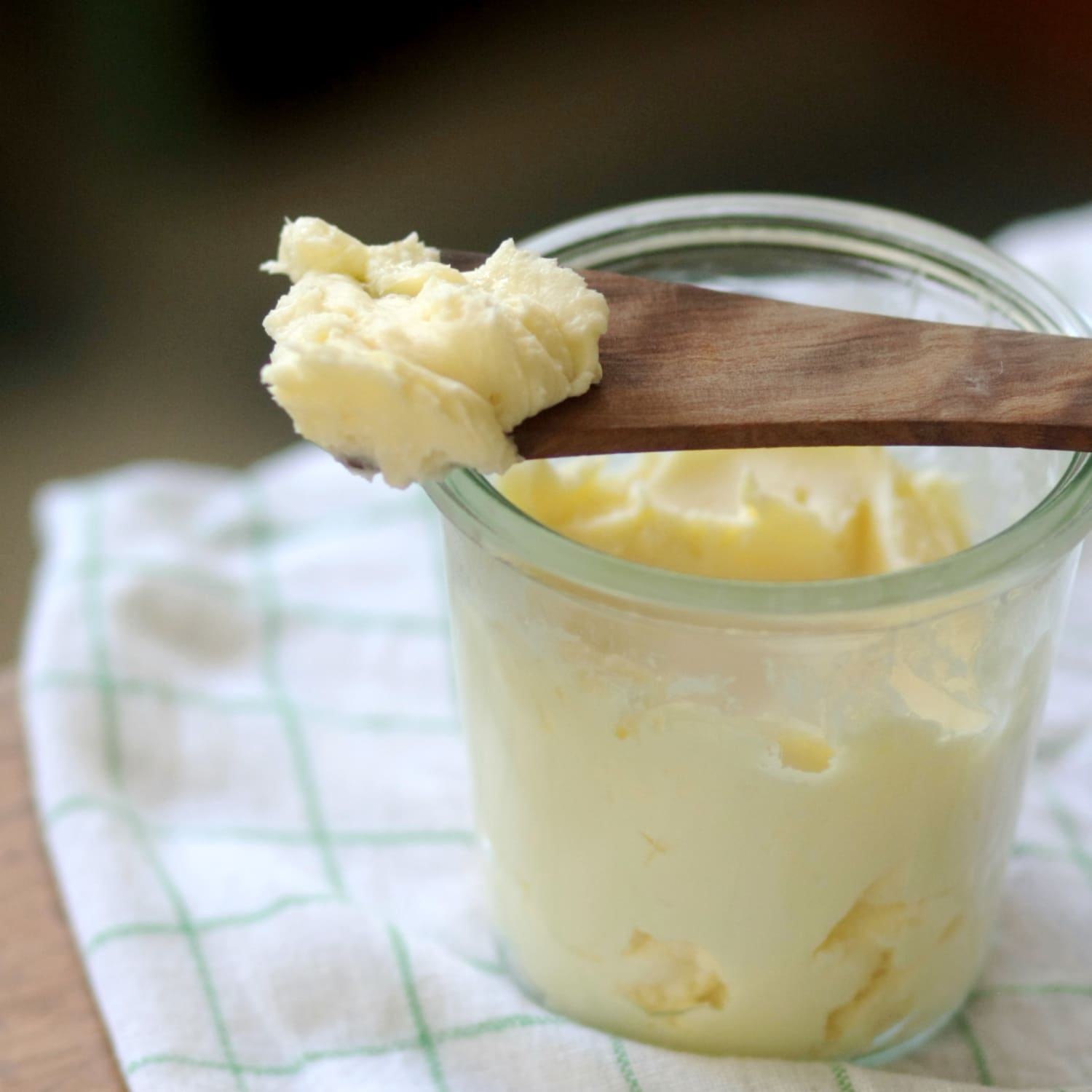
Fresh, Simple, and Delicious
There’s something magical about making butter from scratch. Not only does it elevate your cooking with rich, creamy goodness, but it also connects you to the age-old tradition of crafting food by hand. If you’ve ever wondered how to make homemade butter, this guide has everything you need to know.
Jump to RecipeWhy Make Butter at Home?
Homemade butter isn’t just a fun kitchen project—it’s an opportunity to create a superior product that’s free from preservatives and tailored to your taste. Here’s why you’ll love making butter:
- Unmatched Freshness: The flavor of freshly churned butter is richer and creamier than store-bought versions.
- Customizable: Add your own herbs, spices, or salts for a personalized touch.
- Simplicity: With just one ingredient, making butter is surprisingly easy.
- Cost-Effective: You can save money, especially if you’re already buying cream in bulk.
What You’ll Need
Making butter at home requires minimal equipment and ingredients:
Ingredients:
- 2 cups heavy whipping cream (preferably pasteurized, not ultra-pasteurized)
- ½ teaspoon salt (optional, for salted butter)
Equipment:
- Stand mixer, hand mixer, food processor, or a mason jar
- Fine mesh strainer or cheesecloth
- Bowl for catching buttermilk
- Wooden spoon or spatula
Step-by-Step Instructions
1. Start with Cold Cream
Pour 2 cups of heavy whipping cream into your stand mixer bowl, food processor, or mason jar. Using cold cream helps speed up the process and yields better results.
2. Whip the Cream
Turn your mixer to medium speed or shake the mason jar vigorously. Initially, the cream will turn into whipped cream. Continue whipping, and soon the fats will separate from the liquid (buttermilk).
- Timing: This stage can take 5-10 minutes with a mixer or up to 20 minutes with a mason jar.
3. Strain the Buttermilk
Once the fats separate, strain the buttermilk from the solids using a fine mesh strainer or cheesecloth. Reserve the buttermilk for baking or cooking—it’s a tasty byproduct!
4. Rinse the Butter
To extend the shelf life, rinse the butter under cold water. Knead it gently with a wooden spoon or your hands, rinsing until the water runs clear. This removes residual buttermilk that can cause spoilage.
5. Add Salt (Optional)
If you prefer salted butter, mix in ½ teaspoon of salt. For flavored butter, now’s the time to fold in herbs, garlic, or citrus zest.
6. Store Your Butter
Transfer your butter to an airtight container or wrap it in parchment paper. It can be stored in the refrigerator for up to 2 weeks or frozen for longer shelf life.
Tips for Perfect Butter
- Use High-Quality Cream: The better the cream, the better your butter. Look for local or organic options if possible.
- Temperature Matters: Keep your cream cold, but not frozen.
- Experiment with Flavors: Sweeten it with honey or cinnamon, or make compound butter with chives, dill, or even blue cheese.
- Don’t Waste the Buttermilk: Use it in pancakes, biscuits, or marinades.
Homemade Butter Variations
Herb-Infused Butter
- Mix chopped rosemary, thyme, and parsley into your butter for a savory addition to bread or roasted vegetables.
Honey Butter
- Combine softened butter with honey for a sweet spread perfect for cornbread or waffles.
Garlic Butter
- Blend roasted garlic cloves and a pinch of salt into your butter for an irresistible topping for steak or pasta.
Nutritional Benefits of Homemade Butter
While butter should be enjoyed in moderation, making it at home ensures you’re consuming a natural product without additives. Butter is rich in vitamins like A, D, and E, and it contains healthy fats that are essential for energy and cell function.
Frequently Asked Questions
How long does homemade butter last?
Homemade butter lasts up to 2 weeks in the fridge if properly stored. Rinsing thoroughly and storing in an airtight container are key.
Can I use ultra-pasteurized cream?
While it’s possible, ultra-pasteurized cream may take longer to churn and might not yield as flavorful butter.
What can I do with leftover buttermilk?
Buttermilk is excellent for pancakes, muffins, biscuits, or even as a marinade for fried chicken.

Homemade Butter
Ingredients
- 2 cups heavy whipping cream preferably pasteurized, not ultra-pasteurized
- ½ teaspoon salt optional, for salted butter
Instructions
- Pour 2 cups of heavy whipping cream into your stand mixer bowl, food processor, or mason jar. Using cold cream helps speed up the process and yields better results.
- Turn your mixer to medium speed or shake the mason jar vigorously. Initially, the cream will turn into whipped cream. Continue whipping, and soon the fats will separate from the liquid (buttermilk).
- Timing: This stage can take 5-10 minutes with a mixer or up to 20 minutes with a mason jar.
- Once the fats separate, strain the buttermilk from the solids using a fine mesh strainer or cheesecloth. Reserve the buttermilk for baking or cooking—it’s a tasty byproduct!
- To extend the shelf life, rinse the butter under cold water. Knead it gently with a wooden spoon or your hands, rinsing until the water runs clear. This removes residual buttermilk that can cause spoilage.
- If you prefer salted butter, mix in ½ teaspoon of salt. For flavored butter, now’s the time to fold in herbs, garlic, or citrus zest.
- Transfer your butter to an airtight container or wrap it in parchment paper. It can be stored in the refrigerator for up to 2 weeks or frozen for longer shelf life.
Notes
Tips for Perfect Butter
- Use High-Quality Cream: The better the cream, the better your butter. Look for local or organic options if possible.
- Temperature Matters: Keep your cream cold, but not frozen.
- Experiment with Flavors: Sweeten it with honey or cinnamon, or make compound butter with chives, dill, or even blue cheese.
- Don’t Waste the Buttermilk: Use it in pancakes, biscuits, or marinades.
Homemade Butter Variations
Herb-Infused Butter
- Mix chopped rosemary, thyme, and parsley into your butter for a savory addition to bread or roasted vegetables.
Honey Butter
- Combine softened butter with honey for a sweet spread perfect for cornbread or waffles.
Garlic Butter
- Blend roasted garlic cloves and a pinch of salt into your butter for an irresistible topping for steak or pasta.
Final Thoughts
Making homemade butter is an enriching experience that combines tradition with modern convenience. The next time you’re looking to elevate your cooking or try something new, remember this guide. Fresh butter isn’t just an ingredient; it’s a testament to the joys of homemade simplicity.
Share your butter-making adventures and favorite variations with us in the comments below or tag us on social media using #HomemadeButterMagic!
Leave a Reply